
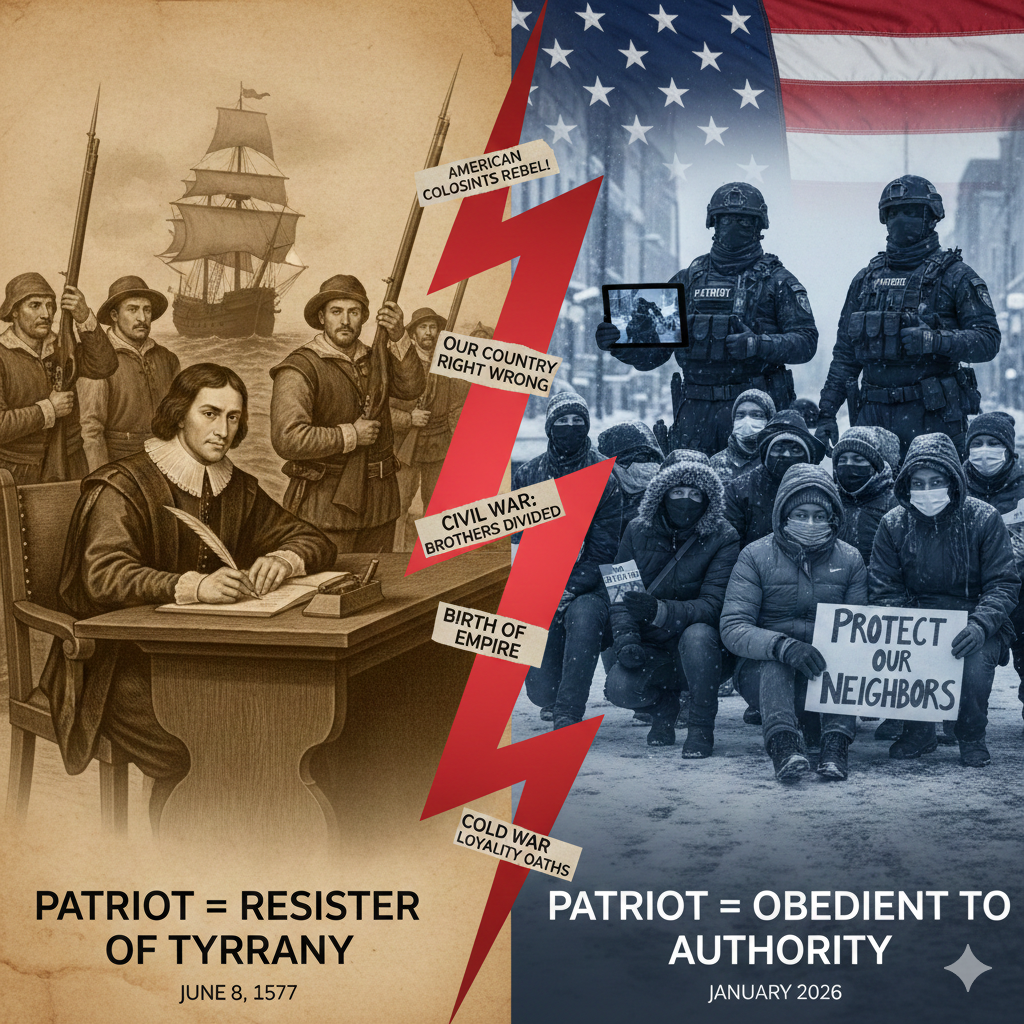
June 8, 1577. Thomas Wilson writes from the Netherlands during the Dutch Protestant revolt against Spanish Habsburg rule. Wilson – diplomat, scholar, Secretary of State to Queen Elizabeth I – describes those fighting Spanish monarchy as “the best patriotes and lovers of their cowntrie.”
This is the first documented use of “patriot” in English. The Spanish authorities called these people traitors, heretics, rebels. Wilson called them patriots.
The word entered English to name people resisting a government they considered illegitimate.
How It Flipped
1780s-1800s: The rebels win, become government.
“Patriot” shifts from “resister of tyranny” toward “supporter of this republic.” Not a complete flip yet, but the mechanism is visible: once rebels hold power, the word begins defending what they’ve built rather than challenging what oppresses.
1816: Stephen Decatur’s toast.
“Our country – in her intercourse with foreign nations may she always be in the right; but our country, right or wrong.”
The moral evaluation drops out. Loyalty replaces judgment.
1861-1865: The Confederacy claims “patriot” while defending slavery.
Both sides claim the word. It becomes purely tribal – “my side is legitimate, yours isn’t.”
Late 1800s-early 1900s: Nationalism consolidates.
“True patriots” support military expansion, empire, state power. Questioning becomes unpatriotic.
Cold War forward: Systematic weaponization.
Anti-war protesters called traitors. Loyalty oaths. “America: love it or leave it.” The word now explicitly means obedience to state power.
Complete inversion from Wilson’s 1577 letter.
January 2026, Minneapolis
Federal agents kill Alex Pretti, ICU nurse and U.S. citizen. Kill others in detention. Operate without warrants, demand state data as leverage.
People pour into subzero streets to shield their neighbors from federal enforcement they view as unlawful.
The federal agents call themselves patriots. The administration calls the protesters terrorists, paid agitators, traitors.
Wilson’s 1577 letter describes people resisting monarchical authority as patriots. The American Revolution canonized that definition – colonists fighting British overreach were patriots.
By that etymology, the people in Minneapolis streets defending constitutional limits are patriots.
But the word doesn’t work that way anymore.
What Happened
Once the Confederacy could claim “patriot” while defending slavery, the word lost its mooring. It became whatever tribal loyalty demanded. Team signifier only.
The inversion completed: a word that entered English meaning “resister of monarchical tyranny” now primarily means “obedient to state power.”
This isn’t semantic drift. Language doesn’t accidentally flip words to their opposites. This is what Orwell described: “War is peace. Freedom is slavery.”
Power captures language. Inverts it. Makes resistance look like obedience, obedience look like resistance.
Now
The No Kings protests – millions in streets saying “this nation has no kings, power belongs to the people” – operate from Wilson’s 1577 definition. Asserting limits on authority, resisting what they view as tyranny.
The people who call them traitors operate from the inverted definition. Patriots = obedient to power, loyal regardless of actions.
Both sides claim the word. Neither side can agree what it means anymore.
Wilson’s letter sits there, 449 years old. First English use of “patriot” to describe people resisting a government they considered illegitimate. The etymology is clear. The inversion is traceable.
The original meaning still makes logical sense. Still has moral content. Someone who loves their country enough to defend it FROM tyranny, including tyranny committed by their own government.
Using the word that way – Wilson’s way – isn’t nostalgia. It’s precision. It’s refusing to let power define resistance as obedience.
Every time we use “patriot,” we’re choosing which definition: the 1577 meaning or the inverted one. The Dutch rebels resisting Spanish monarchy. The colonists resisting British overreach. Or Decatur’s “my country right or wrong,” nationalism’s “support the state,” the Confederacy defending slavery.
The word still exists. Both definitions still exist. Taking back the original meaning is just calling the thing what it actually is.